Rate4Rate

How do I know if I'm attractive?

You might love how you look and still not be someone's type. You might dislike your appearance and be exactly someone else's type.

So how close is your self-image to the impression you make on other people?

That's hard to answer from the inside. You see your face every day, mostly in the same bathroom mirror, under the same light, with the same worries attached. Other people see you for a few seconds, moving, talking, in a room you're both in. Those are 2 very different views of one face.

If you've ever typed "how do I know if I am attractive" into Google late at night, you're far from alone. Compliments and flirting can give you clues. So can the lack of them, though less than you'd think.

Take this quick quiz to sort through the signals you're getting. Then see how to get feedback that goes past your own assumptions.

How attractive am I? Take the quiz

Look at the signals you're getting and see how close your self-image is to the way others see you.

Think about what has happened to you, and leave out what you hope or fear people think. This quiz looks at social signals. It doesn't measure your appearance, and it's separate from the photo ratings you get on Rate4Rate.

Question 1 of 8
  1. When you're out, how often does someone find an excuse to meet you?
How your result is calculated

Write down your letter for each question as you go. You'll count your points at the end.

Count your points

For questions 1 to 7, give yourself:

  • A = 2 points
  • B = 1 point
  • C = 0 points
  • D (not sure) = skip it, it doesn't count

Now count how many of questions 1 to 7 you answered with A, B or C. Find that number in the first column, then find your total points in the same row.

Questions answered (A, B or C)Strong positive signalsMixed signalsFew clear signals
711-14 points6-10 points0-5 points
69-12 points5-8 points0-4 points
58-10 points4-7 points0-3 points
46-8 points3-5 points0-2 points
3 or fewerNot enough clues yet

Signs that people find you attractive

So how do you tell if you're attractive to others? Look for signals that are clear and that repeat.

One stranger smiling at you on the train is nice. 4 different people mentioning your smile in a month is a pattern.

  • They tell you directly

    Someone says they find you attractive, asks you out or tells you they want to kiss you. This is the clearest signal you'll get, because there's nothing to decode.

  • Different people compliment you without being asked

    One friend's compliment can be kindness. The same comment from a coworker, a stranger at a party and someone on a date is harder to wave away. Notice what they compliment, too. If 3 people bring up your eyes, that's useful information.

  • People flirt or keep trying to connect

    They find reasons to talk to you, text first, remember small things you said and suggest meeting again. Effort over weeks says more than one good moment.

  • Certain photos or traits get the same reaction again and again

    One profile photo brings in far more matches than the rest. People keep commenting on your hair since you changed it. When the same photo or the same trait keeps getting a response, take note.

Some signals are harder to read. Eye contact, a smile or a friendly chat in a shop can mean attraction. They can also mean the person is polite or friendly with everyone. Treat these as a maybe.

And a few things people call signs prove very little. Jealousy, hostility, rejection or someone wanting to sleep with you fast usually say more about the other person, or the situation, than about your looks.

A quiet stretch proves little too. If you work from home or rarely go out, you'll see fewer signals. Fewer chances to meet people means fewer signals, whatever you look like.

Why it's so hard to tell how attractive you are

You have more information about your face than anyone alive. You still can't see it the way other people do.

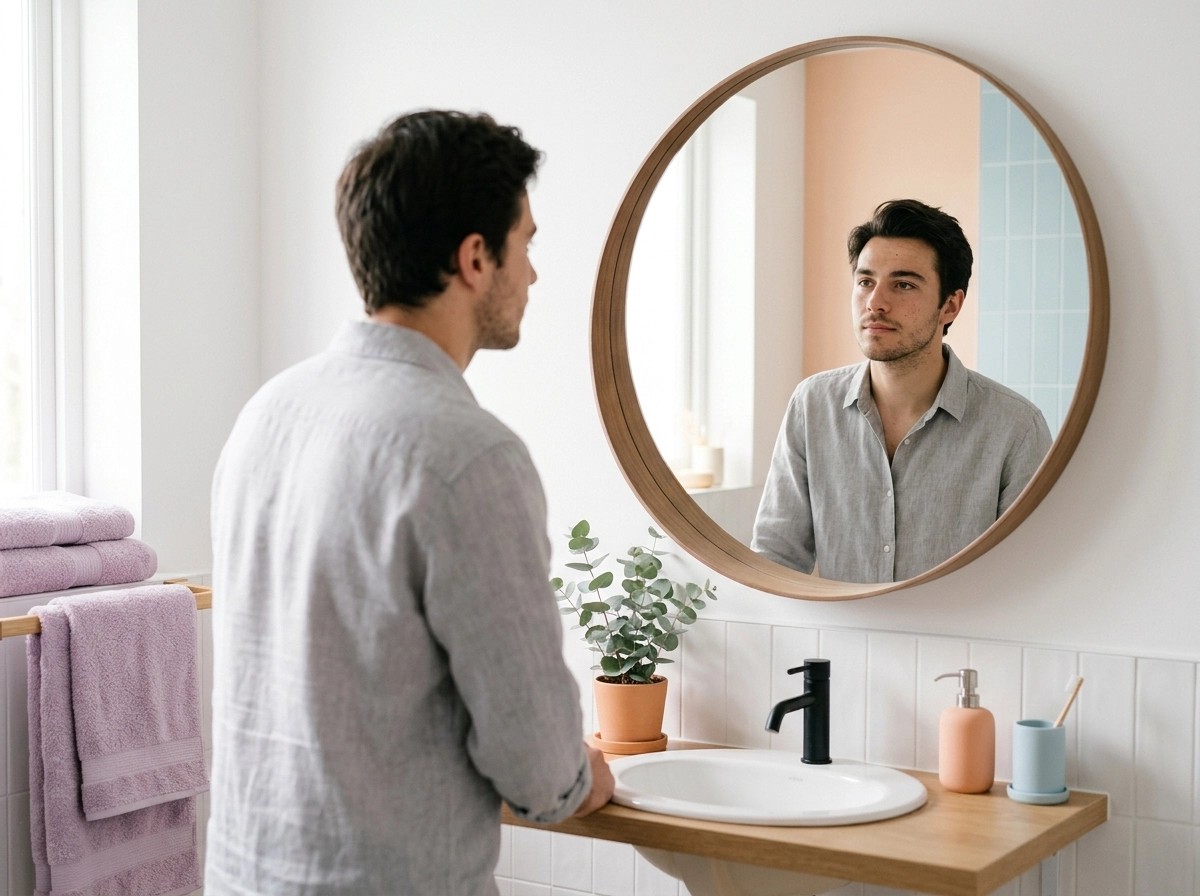
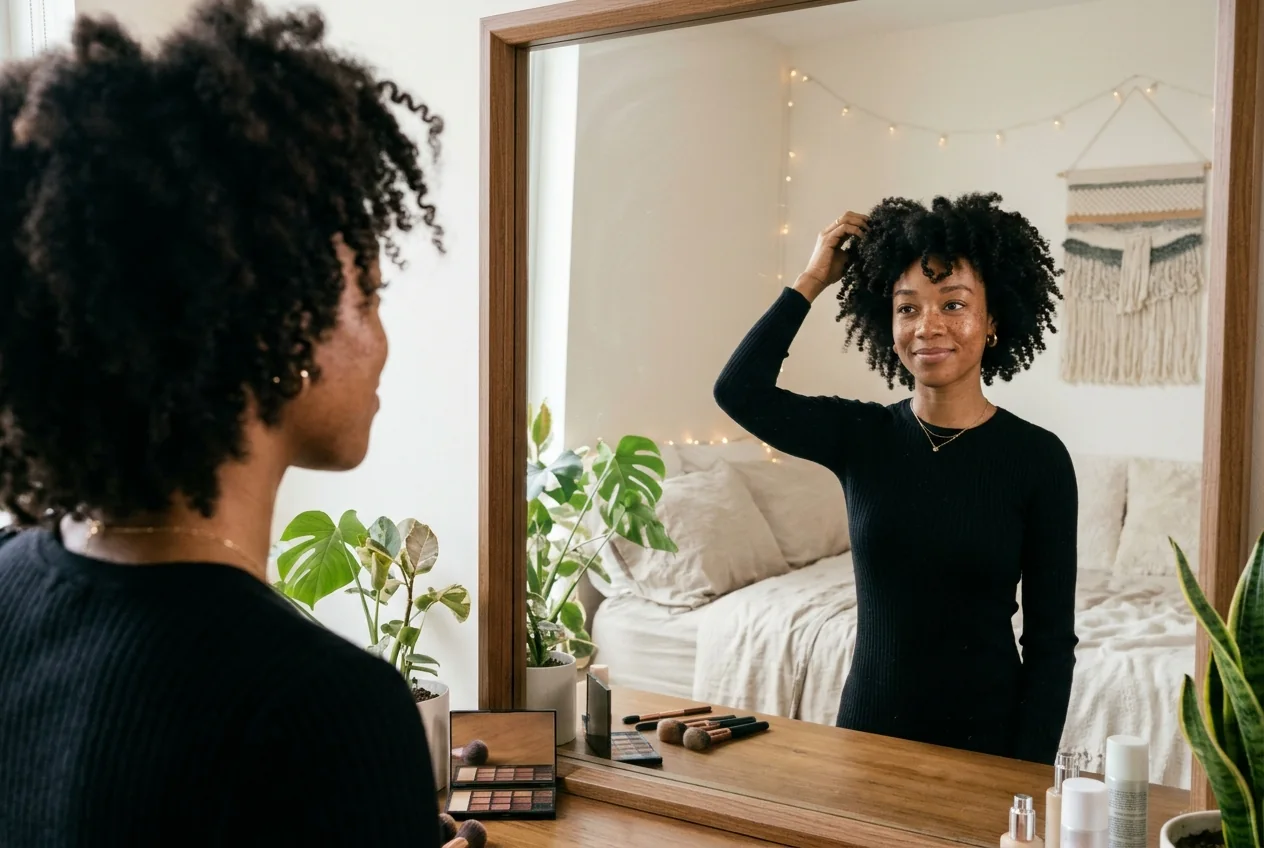
Am I as attractive as I look in the mirror?

The mirror shows you a flipped image. It's the version you've looked at thousands of times, so it feels right. A photo shows the unflipped version, the one everyone else sees, and that's why it can look slightly off to you even when nothing's wrong.

The camera has its own quirks. A phone held at arm's length uses a wide lens up close, which stretches the middle of your face. One frozen frame can also catch you mid-blink or mid-word.

So which one is true? Neither, fully. In person, people see you from many angles, moving, talking and laughing. The mirror and the camera each give you one still slice of that.

Your mood plays a part too. On a bad day you'll spot flaws you didn't notice yesterday, in the same mirror, under the same light.


Asking friends

Your friends like you. That's the problem with their opinion.

They know your jokes and your history, and all of that colors how they see your face. Most of them also won't risk hurting you by saying "that photo doesn't work." Their advice can still help. It's filtered through the friendship.

Likes on social media

A photo with 40 likes might be your best one. Or it was posted at 2 p.m. on a Tuesday, when your followers were at work.

Engagement depends on how many people saw the post, when you posted it, the caption and what the app decided to show. Looks are one part of that mix.

Quizzes, filters and AI scanners

Online quizzes, including the one above, help you think through what's happened to you. A "how attractive am I" filter or AI scanner compares your face with patterns in the data it was trained on, things like symmetry and proportions.

Both can be fun. Neither tells you how a specific group of people, say women in their 30s in Manchester, would feel looking at your photo.

All of these sources give you clues, and you still have to interpret them yourself. Direct feedback from people who don't know you cuts down the guessing.

Am I conventionally attractive, or attractive in my own way?

Being conventionally attractive means fitting the looks most people around you currently agree are attractive. Think of the faces and bodies that keep showing up in ads and films where you live.

Those standards depend on culture and time. The ideal body in a 1990s ad looks different from the one in ads today, and the ideal in Seoul differs from the one in São Paulo.

So if you've searched "how scientifically attractive am I," here's the honest answer: there's no formula. Researchers have studied things like facial symmetry, and those findings describe averages across big groups. They can't predict how the person reading your profile tonight will feel about your face.

An "am I conventionally attractive" quiz can tell you how you rate yourself against a checklist. It can't tell you how people react to you.

What type of attractive am I?

Attraction comes in different flavors. Someone can come across as cute, striking, refined, rugged or sexy, and most people are a mix. The same face can read as cute to one group and striking to another.

Being unconventionally attractive is common, too. A gap in your teeth or a strong nose can make you forgettable to some people and hard to forget for others. Plenty of people prefer the second kind of face.

One way to find out what kind of attractive you are is to ask different audiences and compare. The same photo might get a higher style score from one group and a higher femininity or masculinity score from another. That difference tells you something about how you come across. Curious how women in particular come across? Try our am I pretty quiz.

Ask people who don't know you: the Rate4Rate photo test

People who know you have history with you. Strangers only have your photo, and that's what makes their reaction useful.

Rate4Rate is a rate my attractiveness website where real people rate each other's photos. No AI and no bots. Here's how it works for you:

  • Real users rate you. Every score and comment comes from a person.
  • You pick the audience. Choose the gender and location of the people who rate you. Want to know how women in Berlin see you? Or men in Sydney? Pick them.
  • You get 6 scores, each from 1 to 10. Face, body, sexual attractiveness, masculinity, femininity and style.
  • Raters can leave anonymous comments. They explain their impression and suggest what you could change.
  • You can run repeat tests. Compare photos, outfits, hairstyles or the way you present yourself.
  • It all runs in your browser. There's no app to install.

The process takes 4 steps:

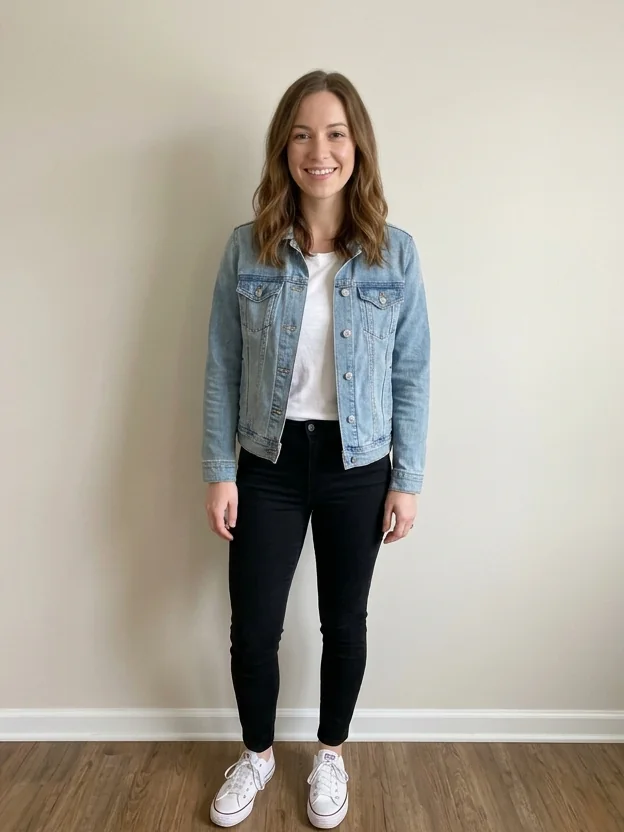
  1. Upload your photos. A face shot and a full-body photo work best together.

  2. Choose the gender and location of your audience.

  3. Rate the required number of other people.

  4. Get your ratings and comments.

Rating others is free. To see your own results, paid access starts at $0.99, or you can invite 3 friends instead. Only you see your results. Rate4Rate is for adults 18 and over.

Why strangers?

A friend's rating comes with years of shared history attached. A stranger rating your photo has no friendship to protect and no reason to be polite. And since you get several ratings, one person's taste doesn't decide your result.

Keep the scores in proportion. They're opinions from the audience you chose, about the photo you uploaded on that day. Think of them as an honest snapshot of how real people see that photo. A different photo or a different audience could move the numbers.

Find your strengths, then decide what to change

A number tells you where a photo stands. The comments tell you what to do next.

  • Look for repeats

    One person says your smile is great. Nice. 5 people say it, and now you know it's a strength. Pick photos where it shows.

  • Change one thing at a time

    Try different lighting, a new hairstyle, other clothes, more or less grooming, or a different lead photo. Change 1 of these, then test again. Change 4 at once and you won't know which one moved the result.

  • Test with a similar audience

    If your first test went to women in London and your second to men in New York, you can't tell if the photo changed the result or the audience did.

  • Compare patterns over several tests

    A small score change or one harsh comment probably means very little. A trend across 3 or 4 tests means a lot more.

Feedback can confirm what already works, and that's worth hearing too.

You also don't have to change everything someone dislikes. If a comment says shave the beard and you love the beard, keep the beard. You're testing how you come across. What you do with that is your call.

Comments about grooming, fitness or style are personal opinions from other users. Treat them as ideas to try. For anything health-related, talk to a professional.

FAQ

Am I more attractive than I think, or less?

You could be either. When you're feeling low, it's easy to rate yourself below how others see you. On a confident day, you might rate yourself a bit higher. The way to check is to compare your guess with other people's reactions. Write down how you expect a photo to score, then test it.

Am I ugly or attractive?

That's a harsh either-or, and very few people fit neatly in either box. How attractive you seem depends on who's looking and which photo they see.

If you keep thinking "I'm not attractive," test that belief with feedback from people who don't know you. And if those thoughts are wearing you down, talk to someone you trust.

Can a quiz tell me if I'm attractive?

An "am I attractive" quiz, including the one on this page, helps you think through the signals you get from people. Hot or not quizzes and face scanners give you a number. None of them shows how a specific audience reacts to your photos. For that, you need ratings from real people.

How attractive am I out of 10?

A number you guess for yourself won't tell you much. On Rate4Rate, real people rate your photos from 1 to 10 on face, body, sexual attractiveness, masculinity, femininity and style. The face and body scores show how physically attractive people find you in that photo. Read all 6 scores together with the comments. One number never tells the whole story.

Can I be attractive without fitting conventional beauty standards?

Yes. Plenty of people stand out because they don't fit the standard. Different audiences respond to different looks, so the same face can do much better with one group than with another.

Is there a free way to get my photos rated?

Yes. Rating others on Rate4Rate is free, and you can get your own results without paying by inviting 3 friends. Paid access starts at $0.99.

Can feedback help me figure out what to improve?

Yes, if you read it for patterns. Anonymous comments can point to specific things, like the lighting or a haircut. Test 1 change at a time and compare the results.

Find your strengths. Get real feedback.

You've taken the quiz and read the signs. Now see how people who don't know you react to your photos.

Pick your audience, upload a face shot and a full-body photo, and see what comes back.